

Hair pattern
The visible pattern and the possibility of future change influence how a plan should be discussed.
Hair Restoration · Istanbul
A considered starting point for understanding your concerns, reviewing the available information and shaping a direction that remains personal to you.
Start your assessmentAssessment before technique
Direction before intervention
The starting point
A hair transplant moves hair into an area that is thinning or bald. The procedure name is only the surface; a responsible direction begins with the person, the existing pattern and an appropriate clinical assessment.

The visible pattern and the possibility of future change influence how a plan should be discussed.
The donor area requires direct clinical review; photographs can begin the conversation but cannot replace examination.
Direction and proportion should be considered in relation to the individual rather than a preset template.
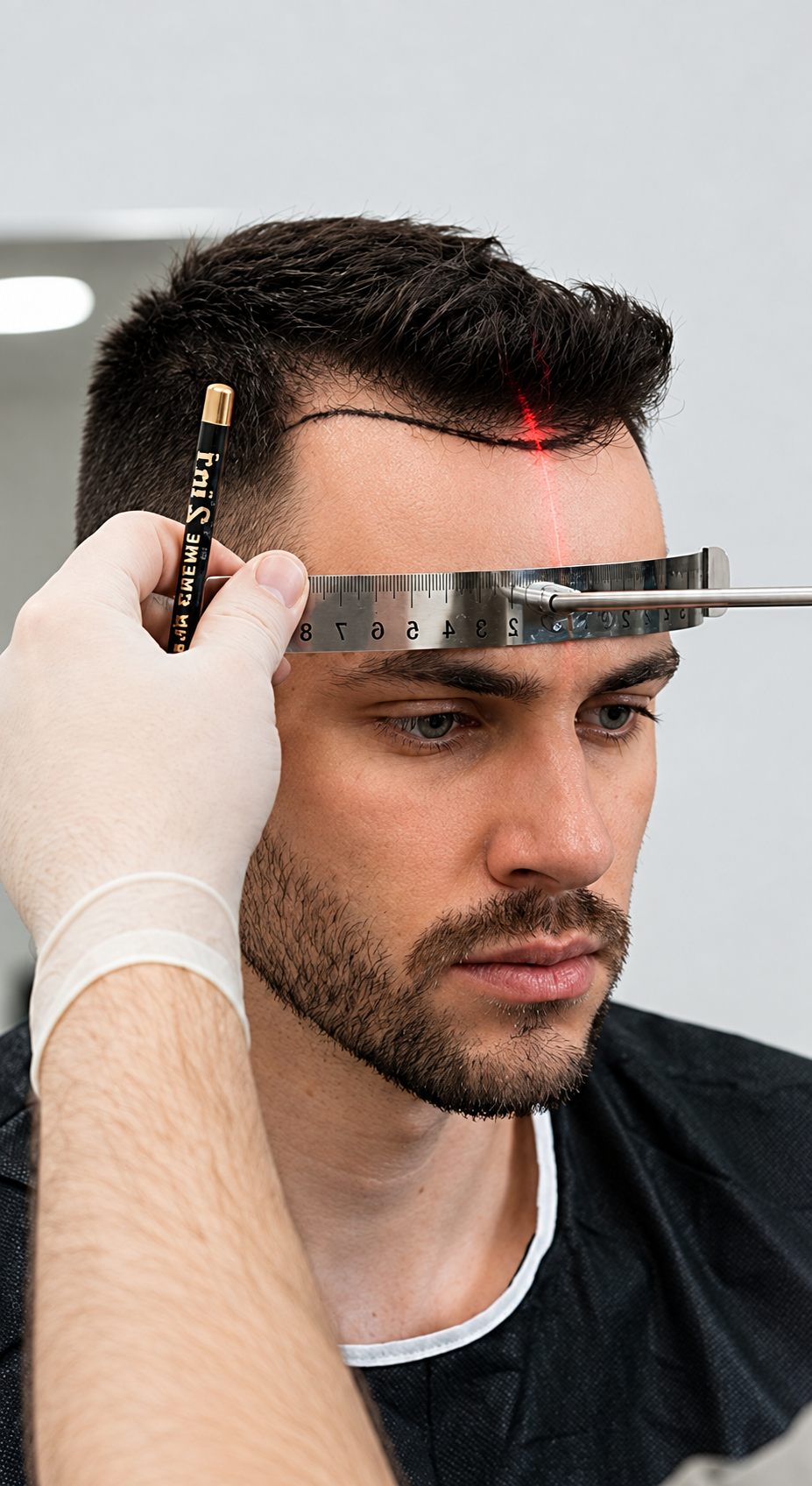
The planning portrait
A preliminary review can make the first conversation more useful. The definitive direction—including suitability, limitations and alternatives—must remain subject to the treating clinician’s in-person assessment.
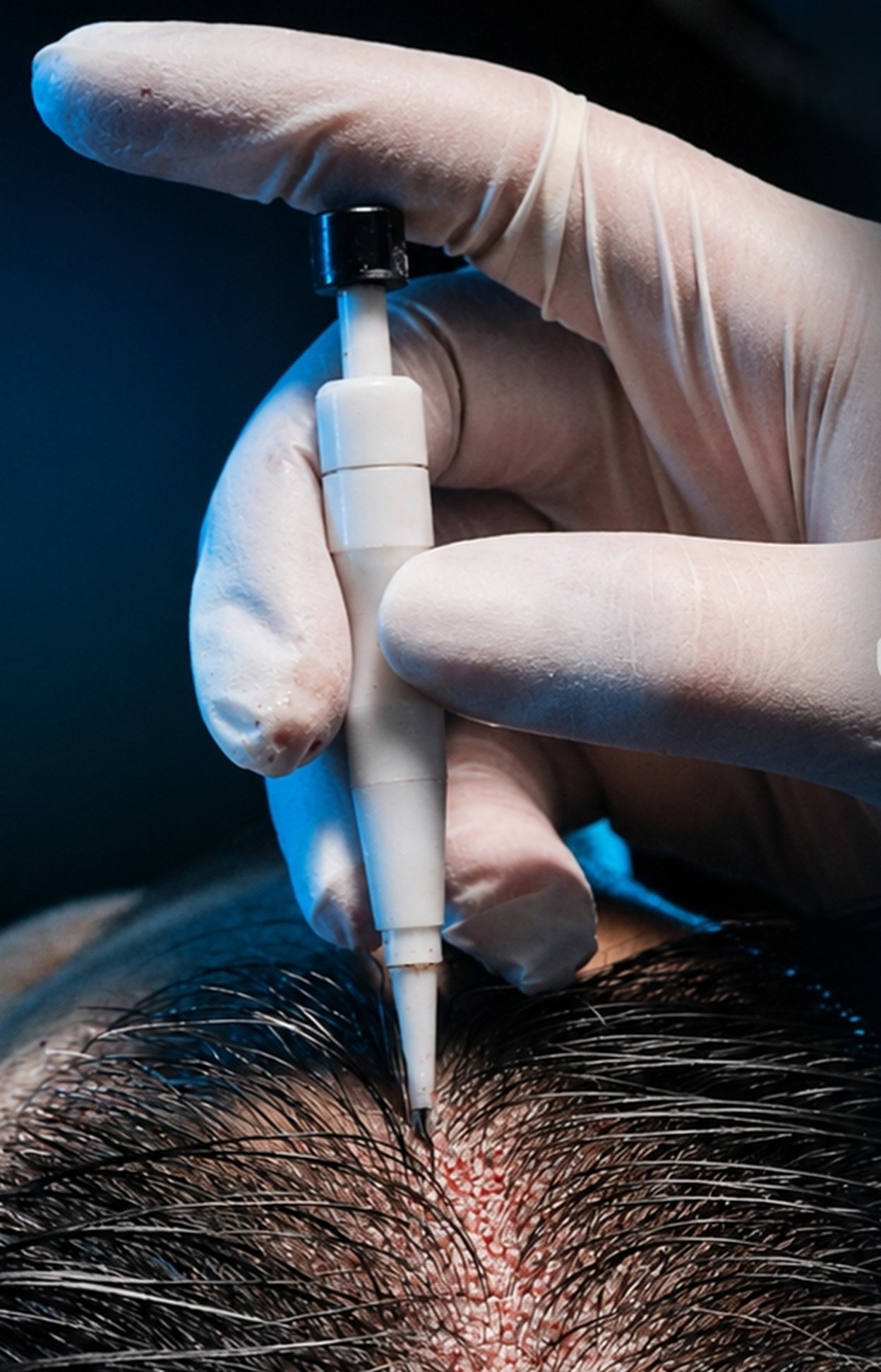
The decision sequence
Describe what you would like to understand and provide clear, current photographs from the requested angles.
The initial material can help identify what may need closer examination and what cannot be decided remotely.
Your priorities, possible options and important limitations can be discussed without treating an online review as a diagnosis.
Suitability and the definitive treatment plan are confirmed only after the required in-person assessment.
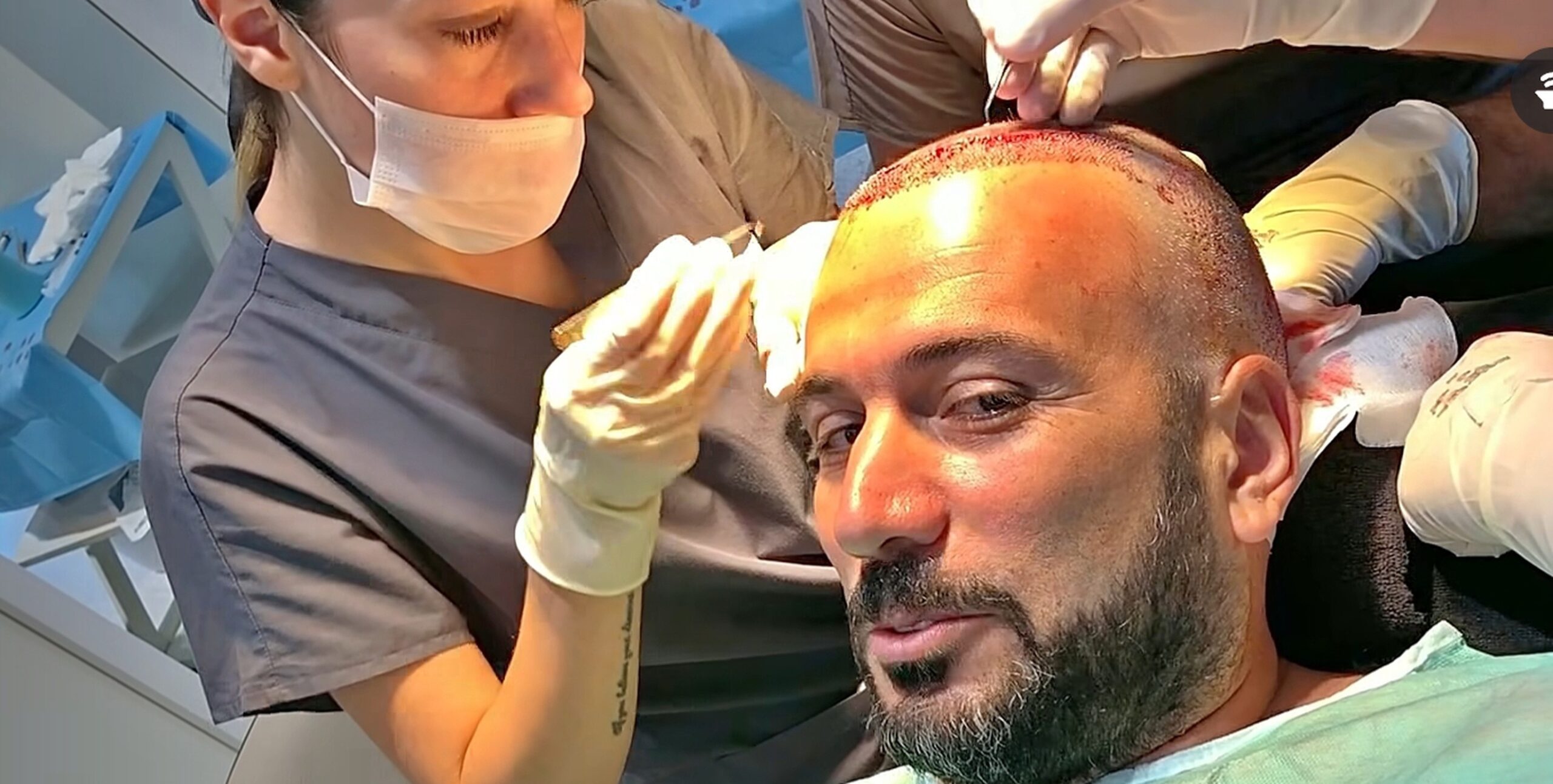
The treatment itself comes after assessment, discussion and confirmation of the individual clinical direction. This documentary view shows treatment in progress without assigning an unverified technique or outcome.
Presented as supplied by the clinic, without adding unverified graft counts, dates or treatment details.
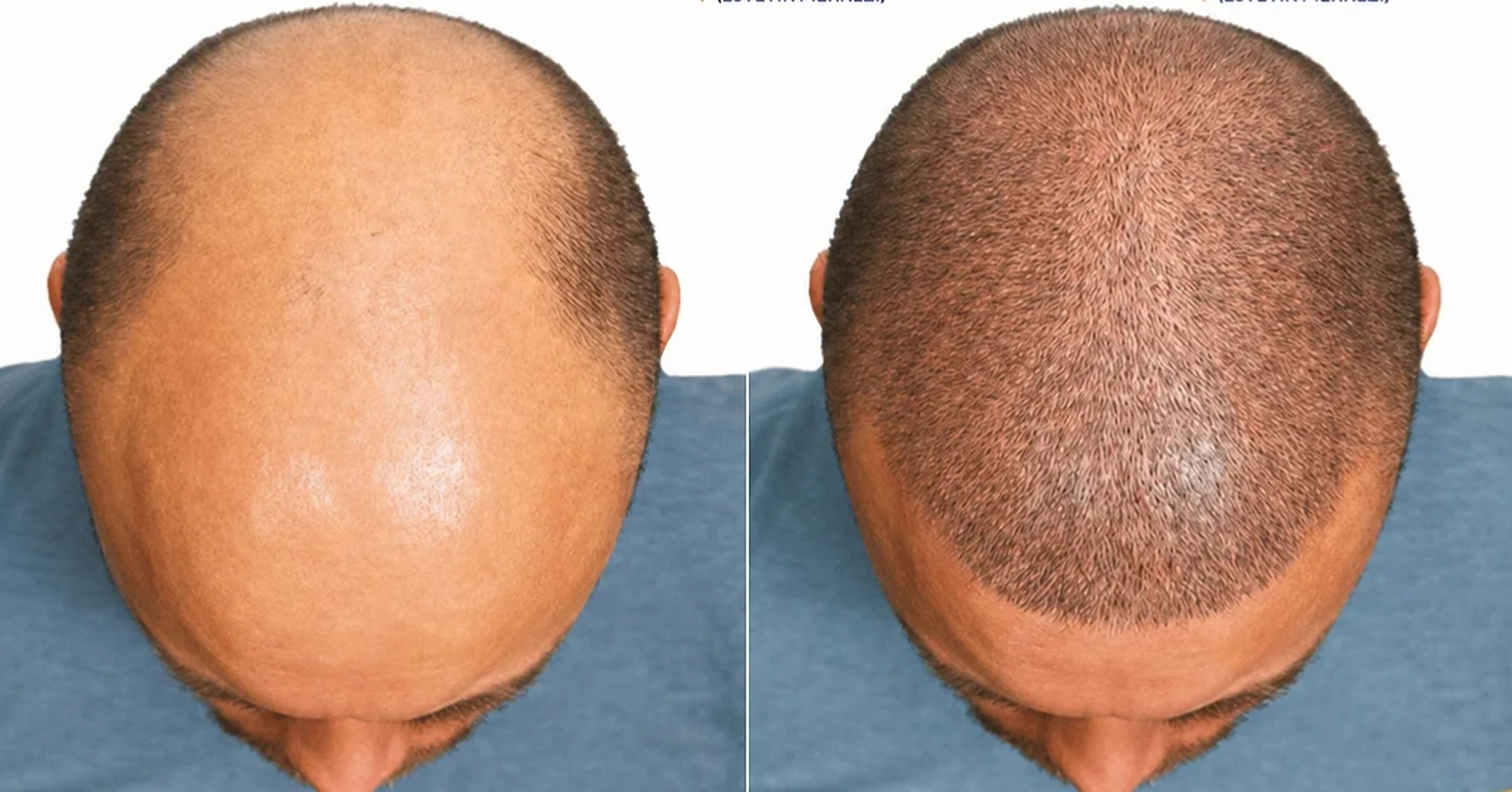
Aftercare & supportive care
Hair restoration is not only the procedure itself. Supportive treatments and aftercare may be discussed around the broader plan according to the individual case and the treating clinician’s assessment.
A platelet-based supportive treatment that may be considered in relation to scalp and hair quality according to individual assessment.
A supportive scalp treatment that may be considered where appropriate as part of an individual care plan.
Where appropriate, Exosome / PDRN support may be discussed as part of the wider care plan. Lamina’s materials reference Atlantis Hair in this context; the specific product and protocol should be confirmed for the individual case.
Lamina’s aftercare materials reference a 3-month care set together with post-transplant lotion and shampoo. Exact contents and use should follow the clinic’s current protocol and the individual plan.
Any medications provided or prescribed are determined according to the clinical plan and individual requirements.
Your clinician can explain which supportive options and aftercare items are relevant to your plan. Inclusions, session counts and medication decisions can vary by case.
Before you decide
No. Photographs may support an initial review, but the definitive plan requires the appropriate in-clinic assessment.
The technique name does not establish suitability. The treating clinician must consider the individual case, available donor area, hair pattern, priorities and relevant medical context.
No. It is a preliminary conversation and does not replace examination, diagnosis, a discussion of risks and alternatives, or informed consent.
Describe your main concern and provide clear, current photographs together with any relevant medical or treatment history requested by the clinic.
No. Supportive treatments should be considered separately from the transplant technique and may be discussed according to the individual case, clinical assessment and Lamina’s current treatment protocol.
Your next step
Tell us what you are considering and share the information you already have. The first review can guide the next conversation; it does not replace an in-clinic assessment.
Start your assessment